Bring the Outdoors In
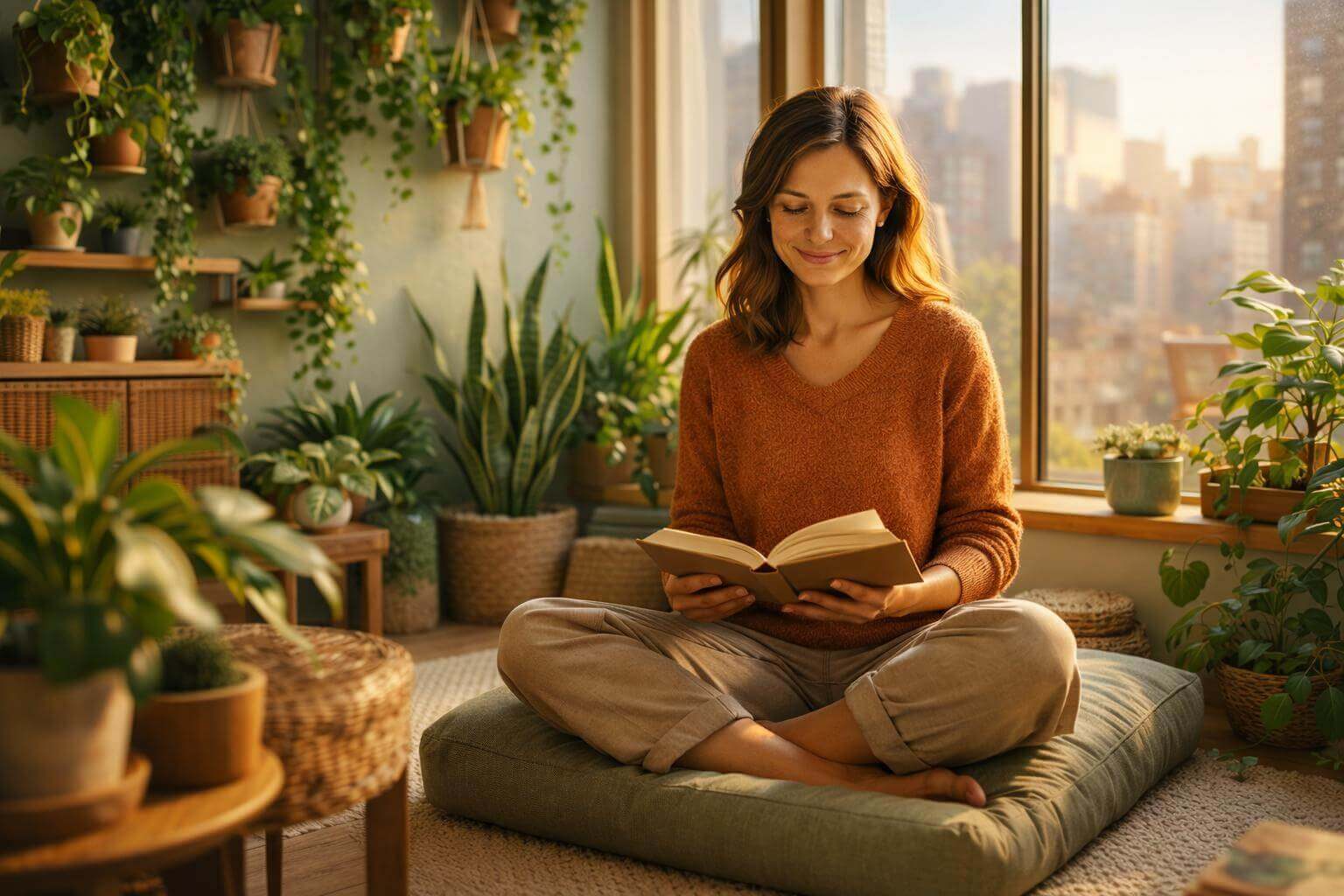
Bring the Outdoors In – Biophilic Design Hacks for Urban Apartments
How to Use Plants, Light, and Natural Materials to Lower Stress and Boost Creativity
Living in a city apartment can sometimes feel like being stuck in a box made of concrete and glass. You wake up, go to work inside a building, come home to another building, and rarely see trees, grass, or even the sky. This disconnection from nature isn’t just sad, it actually affects your health. But there’s good news! You can bring nature into your home, even if you live in a tiny apartment on the 20th floor.
The Problem: Why City Living Makes Us Feel Bad
When you live in apartments or cities, you spend most of your time away from nature. According to recent research from the National Institutes of Mental Health, people spend about 90% of their time indoors. This separation from nature can lead to stress, tiredness, and feeling down.
Think about how you feel after spending time in a park versus sitting in a windowless room all day. That difference isn’t in your imagination, it’s real! Scientists have a name for our natural need to be around living things: biophilia.
What is Biophilia?
Biophilia is a fancy word that means “love of life” or “love of living things.” It’s the idea that humans have a built-in need to connect with nature and other living creatures. We evolved (grew and changed over millions of years) in natural environments, so our brains and bodies expect to be around plants, animals, sunlight, and fresh air.
When we don’t get enough nature, research shows we experience more stress. A 2024 study published in Frontiers in Built Environment found that biophilic design reduces stress and enhances health and wellness. Another study from 2024 showed that biophilic design can yield significant psychological, physiological, and cognitive benefits, meaning it helps your mind, body, and thinking work better.
But here’s the exciting part: You don’t need to move to a farm to get these benefits. You can use “biophilic design” to bring nature into your apartment!
Lighting Layers: Mimicking Natural Rhythms with Smart Bulbs
Let’s start with something you might not think about much: light. The type and timing of light you’re exposed to controls something called your “circadian rhythm” , your body’s internal clock that tells you when to feel awake and when to feel sleepy.
Why Light Matters So Much
Your body has a tiny area in your brain called the suprachiasmatic nuclei (don’t worry about pronouncing it even scientists call it “SCN” for short!). This SCN acts like a master clock. According to research published in the journal Sleep Foundation, when light enters your eye, special cells on your retina send signals to your brain about what time of day it is.
For thousands of years, humans woke up with the sunrise and went to sleep when it got dark. But now we have electric lights, phones, and computer screens that confuse our bodies. A 2024 study from NPR reported something really important: bright light during the day combined with darkness at night creates the contrast your body needs for healthy circadian rhythms.
How to Fix Your Lighting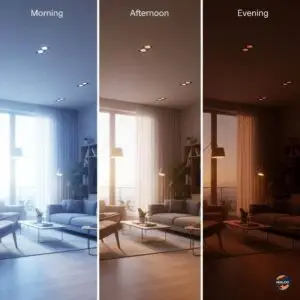

Here’s what you can do in your apartment:
Morning Light (6 AM – 12 PM): Try to get bright light as soon as you wake up. According to research from the Huberman Lab, viewing morning sunlight for 5-10 minutes on sunny days helps regulate your circadian clock. If you can’t get outside, turn on bright overhead lights.
Daytime Light (12 PM – 5 PM): Keep your home bright during the day. If possible, sit near the windows. A study from Northwestern University found that office workers with access to natural light slept 46 minutes longer on average and had better sleep quality compared to people in windowless rooms.
Evening Light (5 PM – 9 PM): As the sun sets, start dimming your lights. According to the CDC’s National Institute for Occupational Safety and Health, avoiding bright light 2 hours before bedtime makes it easier to fall asleep.
Night Light (9 PM – 6 AM): Keep lights very dim or off. The NPR study I mentioned earlier found that bright light between 2:30 and 3 AM was associated with the highest risk of health problems.
Smart Bulb Solution: You can buy smart light bulbs that change color and brightness throughout the day automatically. They can be bright white in the morning, warm and bright during the day, and dim orange in the evening.
Vertical Gardening: Green Walls and Hanging Planters for Zero Footprint
When you don’t have much floor space, you need to think vertically, which means using your walls!
Why Plants Are Amazing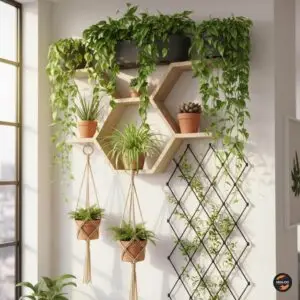
Plants do more than just look pretty. They:
- Release oxygen and absorb carbon dioxide (which you breathe out)
- Add moisture to dry indoor air
- Create a peaceful atmosphere
- Make you feel happier and less stressed
A 2024 study published in Scientific Reports found that indoor nature exposure is correlated with employee well-being. The study also showed that just looking at plants and natural elements improved people’s job satisfaction and energy levels.
Vertical Garden Ideas
Hanging Planters: These attach to your ceiling and don’t use any floor space. You can hang them at different heights to create a “jungle” effect.
Wall-Mounted Shelves: Install simple shelves on an empty wall and line them with small potted plants.
Picture Frame Planters: These look like picture frames but hold small plants like succulents. You can hang several of them together to create a living wall.
Climbing Plants with Trellises: Plants like pothos or philodendron can climb up simple hooks or strings attached to your wall.
Natural Textures: Swapping Plastic for Rattan, Wood, Stone, and Wool
The materials around you affect how you feel more than you might think. Research on biophilic design emphasizes that natural building or decorative materials such as wood, stone, wool, cotton and leather, bamboo, and rattan are highly valued by people for their health-promoting properties.
Why Natural Materials Matter
When you touch smooth plastic, your brain knows it’s artificial. But when you touch wood, stone, or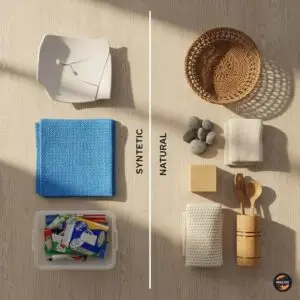 wool, your brain recognizes these as natural materials. This connection to nature, even through materials, helps you feel calmer.
Simple Swaps You Can Make
- Replace plastic chairs with wooden ones (even second-hand ones work great!)
- Add a wool or cotton rug instead of synthetic carpet
- Use rattan or bamboo baskets for storage instead of plastic bins
- Choose wooden cutting boards and utensils instead of plastic
- Display stones or crystals you find on walks or buy from craft stores
- Use cotton or linen curtains instead of synthetic fabrics
Air Purifying Plants: The Top 10 Hardest-to-Kill Plants for Beginners
Now, you might be worried: “I kill every plant I touch!” Don’t worry I’ll share plants that are almost impossible to kill, and I’ll tell you the truth about what they can and can’t do.
The Truth About “Air-Purifying” Plants
In 1989, NASA conducted a famous study about using plants to clean air in space stations. The study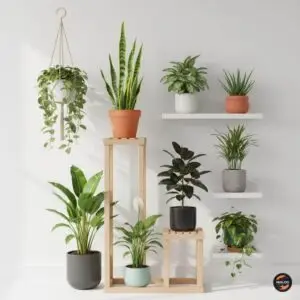 by Dr. Bill Wolverton found that plant leaves and roots can remove toxic chemicals like formaldehyde and benzene from indoor air.
However, later research showed that these results don’t really apply to typical buildings, where outdoor-to-indoor air exchange already removes volatile organic compounds at a rate that could only be matched by placing 10-1000 plants per square meter.
So what does this mean? Plants DO help clean air, but not as much as some websites claim. You’d need a jungle in your apartment to see major air quality improvements. The REAL benefits of plants are:
- They add moisture to dry air
- They look beautiful and reduce stress
- They give you something living to care for
- They create a connection to nature
The 10 Easiest Plants for Beginners
Based on the NASA research and practical experience, here are plants that are nearly indestructible:
- Snake Plant (Sansevieria): Can survive weeks without water. Tolerates low light.
- Pothos: Grows in water or soil. Tells you when it needs water by drooping slightly.
- Spider Plant: Produces baby plants you can share with friends. Very forgiving.
- ZZ Plant: Has thick stems that store water. Can handle neglect.
- Peace Lily: Actually tells you when it needs water by drooping (then perks up after watering!).
- Chinese Evergreen: Tolerates low light and irregular watering.
- Rubber Plant: Has thick, glossy leaves. Needs water only when soil is dry.
- Dracaena: Comes in many varieties. Very tough.
- Philodendron: Easy to grow. Can climb or trail.
- Aloe Vera: Stores water in its leaves. Great for beginners.
Beginner Tip: Start with just 2-3 plants. Learn to care for those before buying more!
Water Features: The Psychological Benefit of Indoor Fountains
The sound of running water is naturally calming. Think about how relaxing it feels to sit by a stream or listen to rain.
Why Water Sounds Work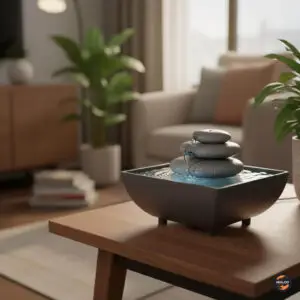
Research in biophilic design shows that biophilic design introduces a variety of sensory elements into the built environment, incorporating a natural experience into daily life. This includes sounds, not just sights.
Small Water Features for Apartments
You don’t need a big fountain! Here are apartment-friendly options:
- Small tabletop fountains: These are the size of a coffee mug and plug into a USB port.
- Wall-mounted fountains: Flat designs that don’t take up floor space.
- Smartphone apps: If you can’t have a real fountain, apps that play nature sounds work surprisingly well!
Important Note: If you have pets or young children, make sure water features are secure and safe.
Color Psychology: Using Earth Tones Effectively
Colors affect your mood. Bright red makes you feel energized (and sometimes stressed). Soft green makes you feel calm. Blue helps you focus.
Best Colors for a Nature-Connected Home
According to biophilic design principles, earth tones work best:
- Sage Green: Calming, like being in a forest
- Terracotta (Clay Orange/Red): Warm and grounding, like earth and pottery
- Sand/Beige: Neutral and peaceful, like a beach
- Soft Brown: Comforting, like tree bark or soil
- Sky Blue: Calming, like looking at the sky
- Stone Gray: Neutral and natural
How to Add These Colors
You don’t need to repaint everything! Try:
- Throw pillows in earth tones
- A terracotta pot for your plants
- Beige or sage green curtains
- A blue blanket or rug
Maximizing Windows: Window Treatments That Let Light In
Windows are your connection to the outside world, don’t block them completely!
The Right Window Treatments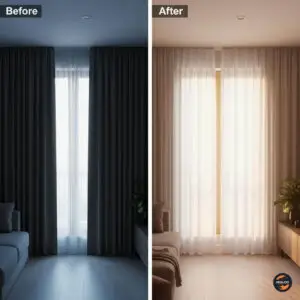
Sheer Curtains: These let light through while giving you privacy. Perfect for living rooms and dining areas.
Top-Down, Bottom-Up Shades: These let you pull the shade down from the top or up from the bottom. You can let light in from the top while maintaining privacy at eye level.
Solar Shades: These block UV rays and heat but still let you see outside.
Light-Colored Curtains: White or light beige curtains reflect light into your room instead of absorbing it.
Window Tips
- Keep windows clean! Dirty windows block up to 20% of light.
- Don’t put tall furniture directly in front of windows
- Remove window screens during winter (they block 25-30% of light)
- Position mirrors across from windows to reflect more light into your room
Scent Scaping: Using Natural Diffusers
Your sense of smell is directly connected to the part of your brain that controls emotions and memories. Natural scents can make your space feel like nature.
Natural Scent Ideas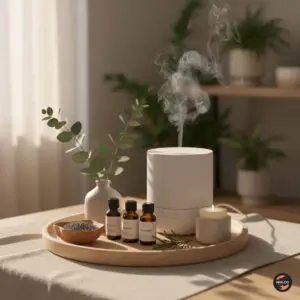
Fresh Options:
- Real eucalyptus branches in your shower (the steam releases the scent)
- Bowls of fresh herbs like rosemary or mint
- Fresh flowers
Essential Oil Diffusers:
- Pine or cedar for a forest smell
- Lavender for calming
- Citrus (lemon, orange) for energy
- Peppermint for focus
Important: Avoid synthetic air fresheners and candles with artificial fragrances. These contain chemicals that can actually worsen indoor air quality. Research shows that some air fresheners can raise indoor concentrations of harmful chemicals.
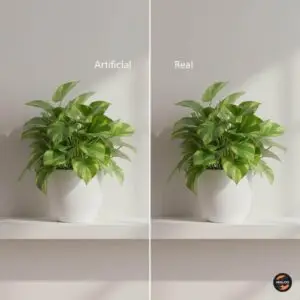
The Fake Plant Debate: When High-Quality Faux Botanicals Are Acceptable
Let me be honest with you: Real plants are better. But fake plants are better than no plants at all!
When Fake Plants Make Sense
- Very low light areas: If you have a windowless bathroom, a high-quality fake plant is fine.
- High shelves you can’t reach: Real plants need watering, which is hard if you can’t reach them.
- Pet safety: Some real plants are toxic to cats and dogs. Fake plants solve this problem.
- Travel: If you travel frequently for work, you might come home to dead plants.
How to Choose Good Fake Plants
- Feel them: Good fake plants have varied textures, not all smooth plastic.
- Look for imperfections: Real plants aren’t perfect. Good fakes have slight color variations and bent leaves.
- Check the price: Really cheap fake plants look really fake. Invest a bit more for quality.
- Mix them with real ones: Use fake plants in hard-to-maintain spots and real ones where you can care for them.
Keep Them Clean!
Fake plants collect dust. Wipe them down monthly or they’ll make your air quality worse, not better!
Putting It All Together: Your Biophilic Apartment Plan
You don’t need to do everything at once! Here’s a simple plan:
Week 1: Light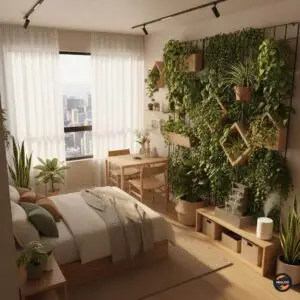
- Buy or use smart bulbs for your bedroom and living room
- Commit to getting morning light (outside or by a window)
- Start dimming lights earlier in the evening
Week 2-3: Plants
- Buy 2-3 easy plants from the list above
- Place them where you’ll see them daily
- Set a weekly reminder to check if they need water
Week 4: Textures and Colors
- Add one natural material item (wooden bowl, wool blanket, etc.)
- Add one item in an earth tone color
Week 5: Sound and Scent
- Try a small water feature or nature sounds app
- Add one natural scent (fresh herbs, essential oil diffuser)
Week 6: Windows
- Clean your windows thoroughly
- Adjust or add window treatments to maximize light
The Science Says It Works
Remember that study I mentioned earlier from 2024? It found that biophilic design in hospitals reduces hospitalization time, patient mortality, pain levels, and stress. Another 2024 study of schools showed that biophilic design led to significant improvements in learning and stress reduction, with fewer behavior problems, better teacher retention, lower absenteeism, and improved test scores.
If biophilic design can help people in hospitals and schools, imagine what it can do for your home where you spend hours every day!
Final Thoughts
You don’t need a big budget or a green thumb to bring nature into your apartment. Start small:
- Get one or two plants
- Improve your lighting
- Add natural materials when you can
- Let in as much natural light as possible
Your apartment might be in the middle of a busy city, but inside, you can create a peaceful, nature-connected space that helps you feel calmer, sleep better, and think more clearly.
Remember: The goal isn’t perfection. The goal is connection with nature, with living things, and with the natural rhythms that humans have followed for thousands of years.
Sources Referenced:
- Frontiers in Built Environment (2024) – Biophilic design systematic review
- Scientific Reports (2024) – Biophilic design and employee well-being
- Sleep Foundation – Light and circadian rhythm research
- NPR (2024) – Circadian rhythms and light exposure study
- NASA Clean Air Study and subsequent research
- National Institutes of Mental Health – Indoor time statistics
- Children & Nature Network (2024) – Biophilic design in schools
- Multiple peer-reviewed journals on circadian rhythms and environmental psychology (2024-2025)
Watch Bring the Outdoors In Video