How to Stop Hating Your Heat Pump ?
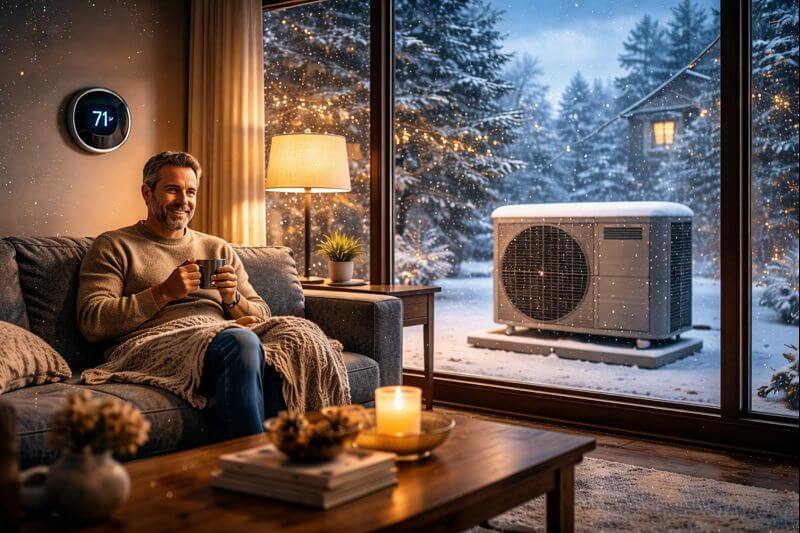
How to Stop Hating Your Heat Pump – Usage Hacks for Winter
Lower your bill and stay warm by unlearning furnace habits
The Problem
If you switched to a heat pump in 2024 or 2025, you might be confused about why your energy bills are so high. You’re not alone! Many homeowners are making a simple mistake: they’re using their heat pump like their old furnace. Heat pumps work completely differently, and using old heating habits can waste a lot of money.
The good news? Once you understand how heat pumps work, you can stay warm AND save money. Let’s fix those expensive habits!
The “Set It and Forget It” Rule: Why Temperature Setbacks Cost Money
The Old Way (Furnaces): With a gas furnace, people saved money by turning the heat down when leaving home, then turning it back up when they returned.
The Heat Pump Way: Heat pumps work best when you pick one comfortable temperature and leave it there all winter long. According to Efficiency Vermont, heat pumps are most efficient when maintaining a set temperature.
Why the difference? Heat pumps produce gentle, steady heat rather than hot blasts. When you turn the temperature way down and then way back up, the heat pump has to work extra hard to warm your home again, which uses more electricity. According to Total Home Supply, heat pumps take longer to raise temperature but use much less power when maintaining it.
What to do:
- Choose a comfortable temperature (between 65-75°F works for most homes, according to C & C Heating research)
- Set your thermostat to that temperature at the start of winter
- Leave it there – don’t turn it down when you leave
- Only adjust the temperature if you’ll be gone more than 24 hours (Efficiency Vermont recommendation)
Defrost Mode: Why Your Unit Makes Weird Noises (It’s Normal!)
The weird thing you might notice: Every 30-90 minutes in cold weather, your heat pump might: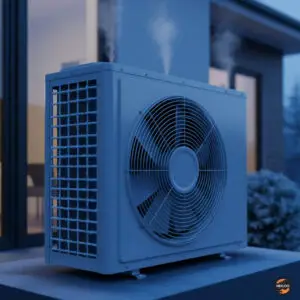
- Make a loud “swooshing” sound
- Stop blowing warm air for 5-15 minutes
- Have steam coming off the outdoor unit
- Make the outdoor fan stop spinning
Don’t panic – this is totally normal! It’s called “defrost mode.”
What’s happening: According to HVAC.com experts, when your heat pump is pulling heat from outside, the outdoor coil can get 10 degrees colder than the air around it. This means frost can form even when it’s above 32°F outside. The frost blocks airflow, so the heat pump needs to melt it.
How it works: Your heat pump temporarily reverses itself (like going into air conditioning mode) to send warm air to the outdoor coil. According to Carrier Ductless specialists, the coil needs to reach between 55-57°F to melt all the frost. This usually takes 5-15 minutes.
What you should know:
- Defrost cycles happen every 30-90 minutes in cold, damp weather (Lennox documentation)
- Each cycle lasts 5-15 minutes (multiple source confirmation)
- This is completely automatic and normal
- Your auxiliary heat usually kicks in during defrost to keep you comfortable
Filter Cleaning: The #1 Cause of Efficiency Loss
The simple truth: A dirty filter is the easiest problem to fix and the most common reason heat pumps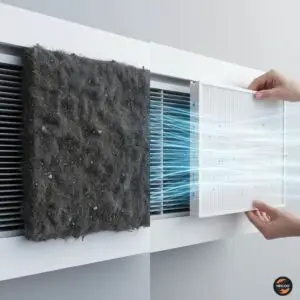 lose efficiency.
Why it matters: According to Neeeco, when the filter fills up with dust, your heat pump has to work harder to push air through. This increases energy use and can make your home less comfortable.
What to do:
- Check your filter every month
- Clean or replace it every 30-90 days (recommendation from ACS Air Conditioning Systems)
- If you see visible dirt or if an indicator light turns on, clean it immediately
- Vacuum dust filters or rinse them with water (depending on your model)
The payoff: This simple 5-minute task can prevent efficiency losses and extend your heat pump’s lifespan.
Auxiliary Heat: How to Avoid the Expensive “Emergency Heat” Strip
Understanding the difference (this confuses almost everyone!):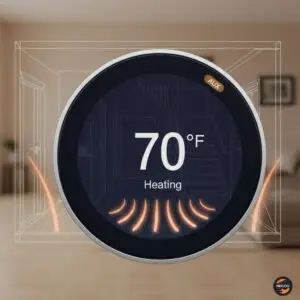
Auxiliary Heat (AUX):
- Turns on AUTOMATICALLY when needed (according to Trane documentation)
- Works alongside your heat pump
- Activates when it’s very cold outside (typically below 35-40°F)
- Also turns on during defrost mode
- Turns on if you raise the temperature by more than 3-4 degrees
- This is NORMAL and okay – it helps your heat pump
Emergency Heat (EM):
- Must be turned on MANUALLY by you
- Shuts off the heat pump completely (Anderson Air research)
- Uses only electric heating strips or backup system
- Should ONLY be used when your heat pump is broken
- Costs about 3 times more to run than regular heat pump operation (Watkins Heating data)
How to avoid expensive emergency heat:
- NEVER manually switch to emergency heat unless your heat pump is broken and you’re waiting for repair
- Raise your thermostat slowly – only 1-2 degrees at a time
- If you see “AUX” on your thermostat in cold weather, that’s normal
- If you see “EM” and you didn’t switch it on, call a technician – something might be wrong
Fan Speed: Why “Auto” Is Often the Wrong Setting
The surprise: For heat pumps, “AUTO” mode isn’t always the best choice.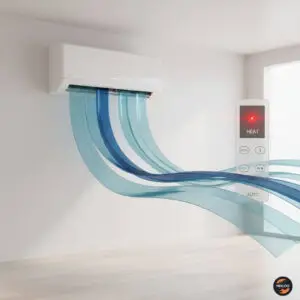
The problem with AUTO mode: According to Efficiency Vermont, when you set your system to “AUTO,” it can toggle unnecessarily between heating and cooling. In spring and fall, the system might switch to cooling mode on a warm afternoon when you could just turn it off instead. This wastes energy.
The right settings:
- Set to “HEAT” in winter
- Set to “COOL” in summer
- “AUTO FAN” (fan speed setting) is different and fine to use
Fan speed tip: According to Efficiency Vermont research, heat pumps actually work most efficiently at higher fan speeds. Use the highest fan speed you’re comfortable with. Yes, it might be a bit noisier, but it heats more efficiently.
Thermostat Placement: Solving “Ghost Readings”
The ghost reading problem: Your thermostat says 72°F, but the room feels cold. What’s going on?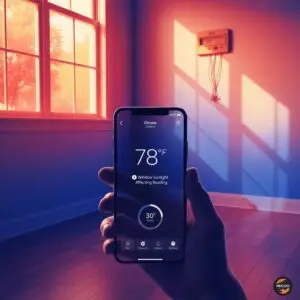
Why this happens: According to Efficiency Vermont, ductless heat pumps use a sensor inside the wall unit where the air might be warmer or cooler than the rest of the room. This means the temperature reading doesn’t always match how the room actually feels.
The solution:
- Stop focusing on the exact number on your thermostat
- Instead, focus on how the room FEELS
- Set your heat pump to what feels comfortable to you
- Adjust it up or down over a few days until you find your perfect setting
- Remember: the number matters less than your actual comfort
For ducted systems: Make sure your thermostat isn’t near:
- Direct sunlight through windows
- Drafty doors
- Heat sources like lamps or appliances
- These can give false readings and make your system work incorrectly
Weatherization: Sealing Drafts to Help the Pump
Why this matters: According to Neeeco, if your home isn’t properly insulated, heat escapes quickly.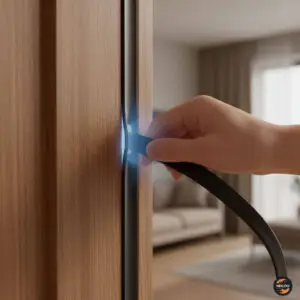 Your heat pump has to work harder and longer to keep you warm, which increases energy use.
Where heat escapes:
- Small gaps and cracks around windows and doors
- Poorly insulated attics, basements, and exterior walls
- Areas where pipes or wires enter your home
What to do:
- Check for drafts on cold days (you can feel them or use a candle to see if the flame moves)
- Seal gaps with weatherstripping or caulk
- Add insulation to your attic if needed (this has the biggest impact)
- Consider a home energy assessment to find hidden leaks
The benefit: Better insulation means your heat pump runs less often, saves energy, and might not need to use auxiliary heat as much.
Smart Thermostats: Compatibility Issues to Watch For
The promise: Smart thermostats can make your heat pump more efficient and easier to control.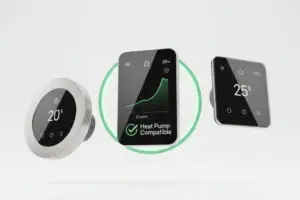
The catch: Not all smart thermostats work well with all heat pumps.
What to check before buying:
- Make sure the smart thermostat is compatible with heat pumps (not just regular furnaces)
- Verify it can control auxiliary heat properly
- Check if it supports defrost mode correctly
- Read reviews from other heat pump users
Special note for heat pumps: According to C & C Heating, programmable thermostats should warm the room in 15-minute increments rather than sudden jumps. This prevents triggering auxiliary heat unnecessarily.
Best practice:
- Have an HVAC technician configure your smart thermostat
- Don’t use aggressive “setback” schedules – remember, heat pumps work best at steady temperatures
- Use the “gradual” adjustment features if your thermostat has them
Maintenance: Cleaning the Outdoor Condenser Coils
Why your outdoor unit matters: The outdoor unit is where your heat pump pulls heat from the air. If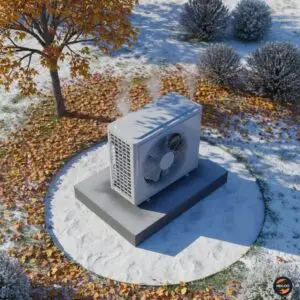 it’s blocked or dirty, your system can’t work efficiently.
What blocks the outdoor unit:
- Snow and ice buildup
- Leaves and debris
- Dirt on the coils
- Plants growing too close
What to do:
- Check the outdoor unit every few weeks in winter (Neeeco recommendation)
- Clear away snow, ice, leaves, and debris
- Keep at least 2 feet of clear space around the unit (Lennox guidance)
- Gently clean the outdoor coils if you see heavy dirt (or hire a professional)
- Don’t let snow completely bury the unit
Schedule professional maintenance: According to ACS Air Conditioning Systems, annual maintenance checks prevent sudden breakdowns and keep your heat pump working efficiently. The best time to schedule this is in summer or fall before you need heating the most.
When to Call a Pro: Refrigerant Leaks vs. Electrical Issues
Don’t try to fix these yourself. Some problems need professional help.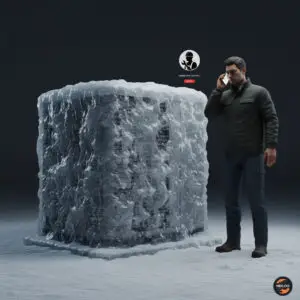
Call a professional if you notice:
Ice problems:
- Heavy ice buildup that stays on the outdoor unit for more than a few hours
- Ice that doesn’t melt after defrost cycles
- The unit looks like “a big block of ice” (InterNACHI description)
Performance problems:
- The heat pump is constantly going into defrost mode
- Auxiliary heat stays on even when the weather warms up
- The system isn’t heating your home adequately
- You hear unusual grinding, screeching, or banging noises (not the normal swooshing of defrost)
Electrical issues:
- The outdoor fan never runs
- The system won’t turn on at all
- Circuit breakers keep tripping
- You smell burning
Refrigerant concerns:
- The heat pump isn’t producing any heat
- Ice forms on the indoor unit
- You notice hissing sounds
- The system short-cycles (turns on and off rapidly)
Remember: According to Carrier Ductless experts, refrigerant leaks and electrical problems require specialized knowledge and tools. Don’t attempt DIY repairs on these issues.
Final Thoughts: Unlearning Old Habits
The biggest challenge with heat pumps isn’t the technology – it’s unlearning what we know about furnaces. Remember these key differences:
Old Furnace Thinking:
- Turn heat down when leaving, up when returning
- Crank it up high to heat faster
- Worry about strange noises
Heat Pump Thinking:
- Set one temperature and leave it
- Adjust slowly, 1-2 degrees at a time
- Expect normal defrost cycles with temporary noises
According to a 2024 study by the National Renewable Energy Laboratory, 65 million American households could save on energy bills by switching to heat pumps. A separate 2024 study found that 95% of households that installed cold-climate heat pumps saw utility bill savings (EnergySage data).
Modern heat pumps work efficiently even at -15°F and below. With the right usage habits, you can stay warm all winter while saving money compared to old heating systems.
Sources used for this guide:
- Efficiency Vermont
- C & C Heating & Air Conditioning
- Neeeco
- com
- Carrier Ductless
- Trane
- Anderson Air
- ACS Air Conditioning Systems
- Lennox
- InterNACHI
- EnergySage
- National Renewable Energy Laboratory
- Total Home Supply
- Watkins Heating
Watch the video: How to Stop Hating Your Heat Pump