
The Concrete Jungle Farmer
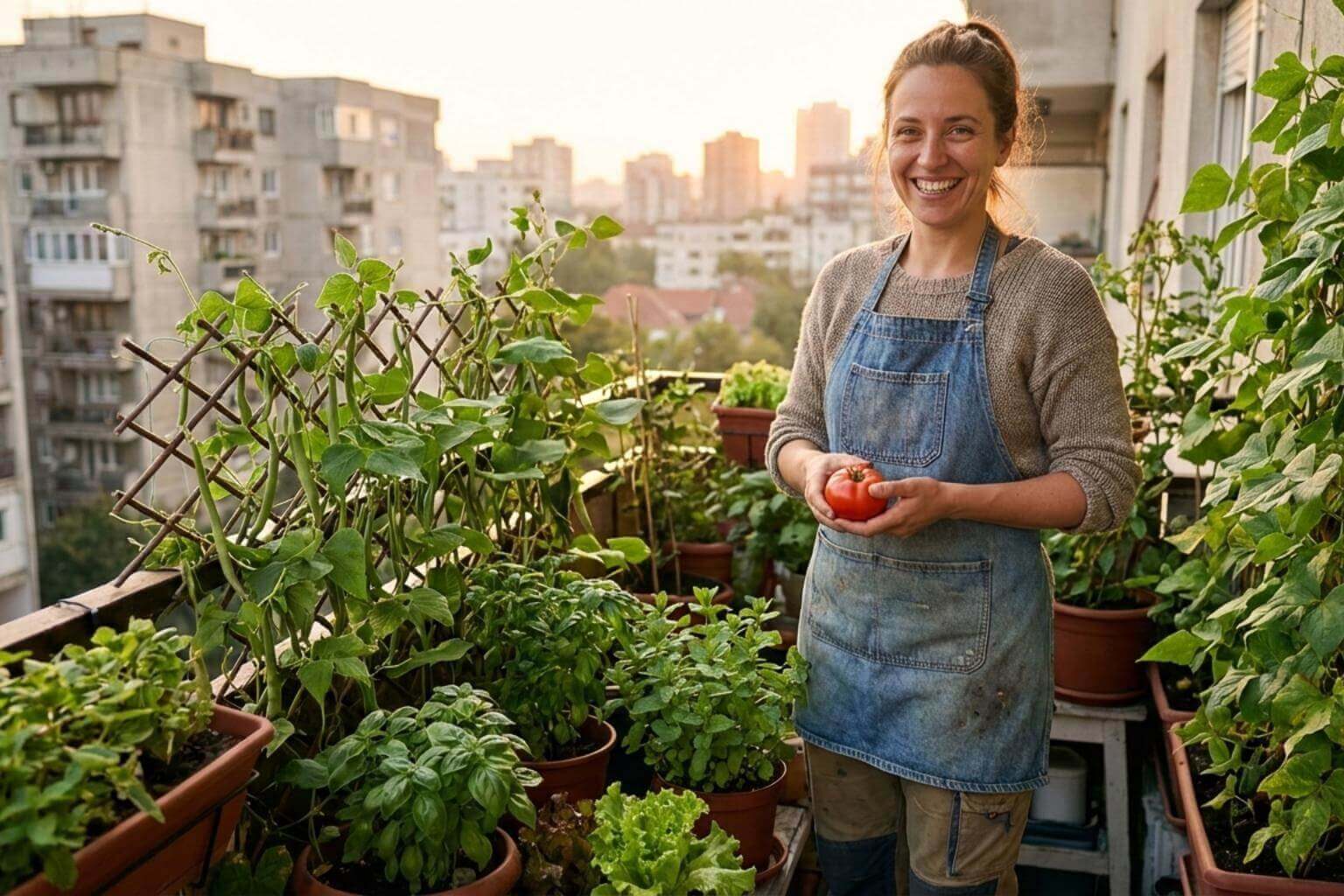
The Concrete Jungle Farmer – Gardening Without a Yard
Growing tomatoes on balconies and wildflowers in sidewalk cracks
The Problem You’re Facing
You live in an apartment or have no yard, but you want to grow your own food and make your neighborhood greener. You look outside and see concrete everywhere but don’t give up! According to a recent study from Los Angeles, guerrilla gardening has evolved from a necessity for people who didn’t own land into a powerful tool for environmental activism. Even the smallest balcony can become a productive garden.
Container Logic: Choosing Pots That Work
Your containers are like homes for your plants, pick the wrong home, and your plants won’t be happy.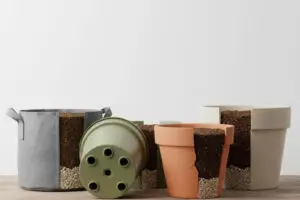
What Makes a Good Container?
According to the Royal Horticultural Society (RHS), containers must have drainage holes at the bottom to prevent waterlogging. Think of it like this: if you stood in a bathtub full of water all day, your feet would get soggy and uncomfortable. Plants feel the same way!
Container materials that work best:
- Plastic and fiberglass: The Old Farmer’s Almanac recommends these because they are lightweight and won’t add excessive weight to balconies. This matters especially if you live in an apartment building.
- Fabric grow bags: According to Gardening.org, these have handles for easy portability and are simple to store after the growing season.
- Avoid terra cotta in cold areas: Research from Wild Ones Native Plants shows that terra cotta and pottery can become brittle and crack in freezing winter temperatures.
Size matters: The Frenchie Gardener explains that it’s better to have one healthy plant per pot with adequate space than two plants crowded in the same container. For most vegetables, use containers at least 12 inches deep (about the length of a ruler).
Vertical Gardening: Growing Up, Not Out
When you don’t have much floor space, grow your plants upward!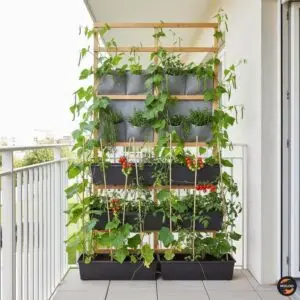
Smart Vertical Solutions
According to Epic Gardening, balconies have three distinct sections to maximize: the floor, the railings, and vertical wall space. Here’s how to use each:
Railing planters: These sit on top of your balcony rails. Live Wildly reports that plants like green beans, some tomatoes, and cucumbers happily grow up railings, creating both food and privacy screens.
Trellises and supports: DripWorks explains that vertical gardening involves attaching plants to vertical panels like trellises or fences, allowing them to grow upward instead of sprawling on the ground. A simple bamboo pole or string works perfectly.
Plants that love climbing:
- Pole beans
- Peas (varieties like ‘Sugar Ann’ produce abundantly in small spaces, according to The Nature of Home)
- Cucumbers (compact varieties like ‘David’s Garden Slicing Diva’ stay small, as reported by Gardeners’ Magazine)
- Tomatoes (use a trellis or stake)
The “Seed Bomb”: Greening Abandoned Spaces
Want to bring nature back to your neighborhood? Seed bombs are your secret weapon!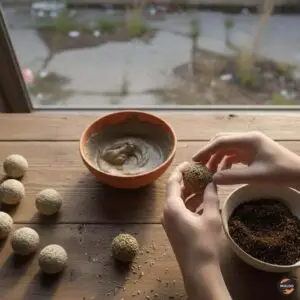
What Are Seed Bombs?
According to Cronkite News coverage from October 2024, seed bombs are balls of packed soil, clay, and native seeds that can be tossed into vacant lots or sidewalk cracks to quickly introduce native plants. A Los Angeles organization called Common Studio created vending machines that distribute these seed bombs to make guerrilla gardening accessible to everyone.
How to Make Seed Bombs
PunkMed provides this simple method: Mix seeds, compost, and clay, pack them tightly into small balls, and allow them to dry. When rainfall re-hydrates the dried clay ball, it frees the seeds and allows them to germinate and grow.
Important rule: Always use native plants. According to GuerrillaGardening.org, native plants attract birds, insects, and other wildlife, contributing to urban biodiversity. Native plants also grow better because they’re suited to your local climate.
Guerrilla Gardening Etiquette
A 2025 research paper from ScienceDirect emphasizes that planting on land you don’t own can range from being technically illegal to falling into a legal grey area, with potential consequences including warnings or removal of plantings. The RHS advises: As long as guerrilla gardening is done in public spaces, it generally comes down to what individual councils will permit.
Safe places to try:
- Tree beds (those squares of soil around street trees)
- Neglected planters
- Your own building’s entrance (with permission)
- Community garden spaces
High-Yield Crops: Getting the Most Food from Small Spaces
Some plants give you lots of food even in tiny pots. Choose wisely!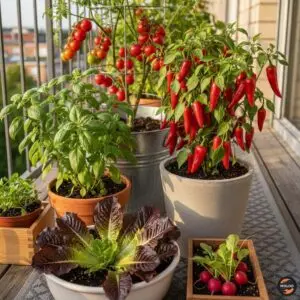
The Champions of Container Growing
Cut-and-come-again lettuce: According to Tiny Garden Habit, lettuce can be harvested leaf by leaf, and the plant keeps growing throughout the season. Plant varieties like ‘Red Sails’ or ‘Oak Leaf’ in shallow containers (just 4 inches deep!).
Herbs: Gardening.org reports that herbs have a “cut and come again” nature that makes them high-yielding despite needing limited growing space. Start with basil, parsley, chives, mint, and oregano. Gardeners’ Magazine notes that one or two oregano plants are enough to fill your kitchen needs.
Chili peppers: The Good Men Project states that varieties like ‘Mini Bell’ and ‘Shishito’ produce dozens of peppers per plant with minimal space. Gardener’s Path reports that ‘Thai Hot’ peppers can produce up to 200 peppers per plant on eight- to 12-inch plants.
Cherry tomatoes: According to Savvy Gardening, tomatoes, peppers, eggplants, and beans are excellent plants to grow in containers on balcony floors. Cherry tomato varieties like ‘Patio Princess’ or ‘Tiny Tim’ work best in pots.
Radishes: Fresh Harvest Haven reports that radishes are ready in just 3 to 4 weeks with small root systems that make them well-suited to shallow containers.
Pollinator Friendly: Flowers That Attract Bees
Bees and butterflies need help in cities! Your balcony can become a tiny wildlife sanctuary.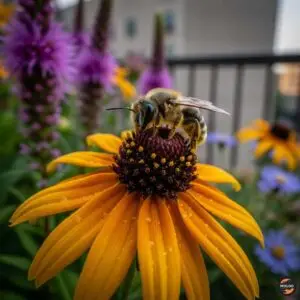
Why This Matters
The National Wildlife Federation explains that even a tiny garden can become a crucial wildlife oasis, as monarch butterflies depend on specific plants for reproduction, and with their alarming population decline, every space matters.
Container-Friendly Pollinator Plants
According to the National Wildlife Federation, keystone plants support 90% of butterfly and moth populations and up to 60% of native bees. Good choices for containers include:
- Black-eyed Susan (Rudbeckia hirta): Produces golden-yellow flowers that attract butterflies and bees
- Blazing star (Liatris spicata): A purple-flowering plant that attracts monarchs
- Blue wood aster: Shows vibrant purple flowers in late summer
PunkMed recommends: Wildflowers are sure to make any space more attractive and will provide food and shelter for pollinators.
Composting in Apartments: Turning Scraps into Gold
No yard? No problem! You can still compost your kitchen scraps.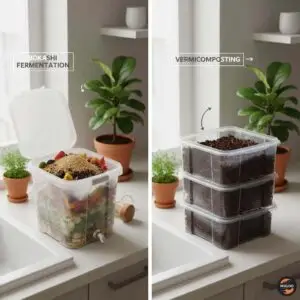
The Bokashi Bucket Method
Biome US explains that bokashi composting uses beneficial microorganisms to break down food scraps in an airtight bucket, and the process is fast, easy, and odorless. Unlike regular composting, bokashi can handle almost any type of food waste, including meat, dairy, citrus, and onion.
How it works:
- Get a bokashi bucket (a special container with a tight lid and a tap at the bottom)
- Add food scraps in layers
- Sprinkle bokashi bran (special microorganisms) on each layer
- Seal it tight and wait 2 weeks
- Empty the fermented material into soil or a larger container
Gardens Illustrated reports that the process produces a powerful liquid fertilizer that can be drained every two days, diluted (one teaspoon to 4.5 liters of water), and applied to plants.
Worm Farms for Apartments
1 Million Women explains that worm farms use worms to break down organic matter into nutrient-rich ‘worm castings’ that serve as super fertilizer, and the process is faster than regular composting. Best of all, they don’t smell because the worms eat all the bad-smelling bacteria.
What worms can’t eat: According to Bokashi Living, you should not add meat, dairy, citrus, or oily foods directly to a worm composter. But you can first put these items through a bokashi bucket, then add them to the worm farm!
Red Worm Composting found that combining bokashi with worm composting works excellently because the bokashi-fermented food waste is soft and already breaking down, making it almost like “worm heaven”.
Watering Systems: DIY Drip Irrigation for Busy People
Balcony plants dry out fast, especially on hot, windy days.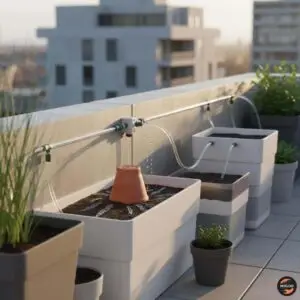
Smart Watering Solutions
The New York Botanical Garden warns that a balcony’s exposure to strong sun and wind demands that plants be watered continually.
Self-watering containers: According to a San Francisco urban gardening blog, self-watering planters have a water reservoir that stores excess water when it rains and provides moisture when weather is dry.
Ollas (clay pots): Growing in the Garden explains that an olla is filled with water that seeps through its porous wall into the surrounding soil and root zone, providing regular moisture.
DIY drip system: The Old Farmer’s Almanac suggests: For rooftop gardens where carrying water jugs is difficult, consider drip irrigation or self-watering pots.
Budget trick: One commenter on the Almanac shared this tip: Keep empty 1.5-liter water bottles in the bathroom and fill them while running bath water until it gets hot. This prevents wasted water and makes transporting water easier.
Sunlight Mapping: Understanding Your Balcony’s Light
Not all balconies get the same amount of sun. You need to figure out what yours to receive.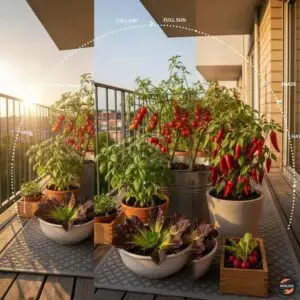
How to Track Your Sun
According to Savvy Gardening, south-facing balconies are best for growing, but southeast or southwest-facing balconies will also work well. Garden Design recommends: The amount of sunlight your space receives is the most critical factor to consider when planning what to grow.
The simple test: Walk out to your balcony several times throughout the day (morning, noon, afternoon) and notice which areas get direct sunlight. The New York Botanical Garden notes that north-facing balconies capture only two hours of light per day, getting most light from mid-March through the end of June when the sun moves north.
What to grow where:
- Full sun (6+ hours): Tomatoes, peppers, cucumbers, herbs like basil
- Part shade (3-6 hours): Lettuce, spinach, kale, herbs like parsley and mint
- Shade (less than 3 hours): Focus on leafy greens
Helpful trick: The New York Botanical Garden suggests: Add more light to a north-facing garden by adding mirrors and painting walls light colors to increase reflected light.
Guerrilla Etiquette: Where You Can (and Can’t) Plant in Public
Guerrilla gardening can beautify cities, but you need to do it responsibly.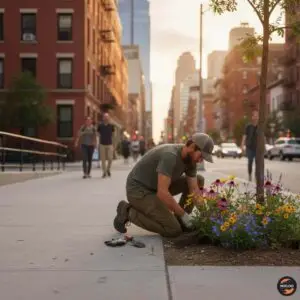
Legal Considerations
Seedy Farm clarifies that guerrilla gardening inherently operates in a complex legal and ethical space, as planting on land without permission could have potential consequences including warnings, fines, or removal of plantings.
However, Gather Magazine found that in reality, there seems to be little opposition to those who want to turn overgrown patches into meaningful spaces, and some guerrilla gardeners do seek council permission.
The Safe Approach
According to the RHS guide: Public nuisance should be avoided, make sure activities don’t cause upset or inconvenience to others, keep noise and disruption to a minimum, and always be aware of access so you don’t block prams or wheelchairs.
Best practices:
- Start with spaces that are clearly neglected or abandoned
- Use native plants that won’t become invasive
- Don’t block sidewalks or create tripping hazards
- Consider asking local officials for permission
- Join or start a local guerrilla gardening group
Wikipedia’s entry on guerrilla gardening shows that Liz Christy and her Green Guerrilla group in 1973 transformed a derelict private lot in New York’s Bowery Houston area into a garden that is still cared for by volunteers today under city parks department protection. What started as guerrilla gardening became officially recognized!
The Mental Harvest: The Joy of Eating Something You Grew
This is the best part: it’s not just about the food.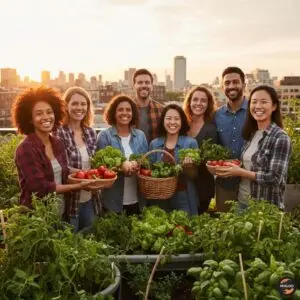
Why It Matters
Medium’s coverage of guerrilla gardening explains that the movement is not just about beautification but represents ecological activism, a statement on food security, community resilience, and reclaiming public space.
Gather Magazine interviewed participants in the Incredible Edible Todmorden project and found that over time, the work transformed not only neglected spaces in the area but also the community’s mindset into one that is connected and supportive. One organizer explained: “We always want to encourage people who are in recovery, whether that’s drugs, alcohol, or a broken heart… It’s just a really beautiful mixture”.
What You Gain
Mental health benefits: Growing plants reduces stress and gives you a sense of accomplishment Fresh, safe food: You know exactly what went into growing your food Environmental impact: According to Simply Cups, composting prevents food scraps from rotting in landfill where they produce methane emissions, which contributes to global warming Community connection: Urban Gardening Guru reports that guerrilla gardening fosters community building as neighbors come together to improve shared spaces Educational value: Kids learn where food comes from
Getting Started Today
You don’t need to do everything at once. Here’s a simple plan:
Week 1: Choose 2-3 containers and select one easy plant (like lettuce or herbs) Week 2: Map your balcony’s sunlight and set up your containers Week 3: Start a small bokashi bucket or worm farm for your kitchen scraps Week 4: Plant your first seeds or seedlings Ongoing: Water regularly, watch your plants grow, and enjoy the process!
Remember what Live Wildly discovered: With a bit of patience, planning, and experimentation, you can absolutely grow vegetables on a balcony.
Your concrete jungle can bloom. Start small, stay curious, and join thousands of urban gardeners worldwide who are proving that you don’t need a yard to grow your own food and make your neighborhood greener.
Happy growing up!
All information in this guide is based on current research and expert sources from 2023-2025, including guidance from the Royal Horticultural Society, university extension programs, environmental organizations, and experienced urban gardening practitioners worldwide.
Watch the video: The Concrete Jungle Farmer


